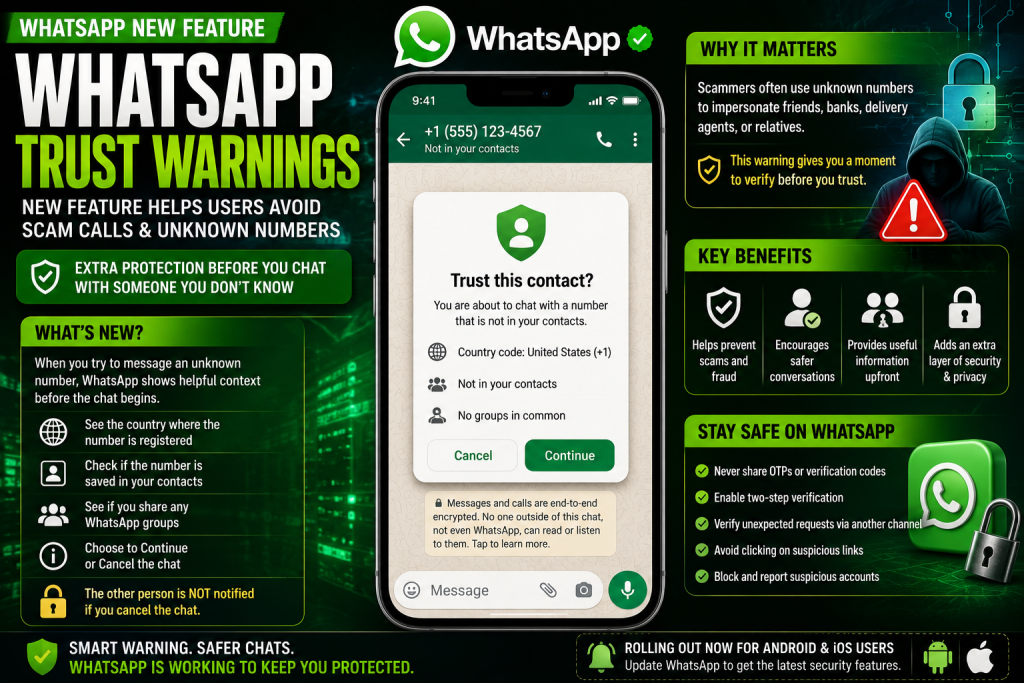
WhatsApp is reportedly rolling out a new security feature designed to help users avoid scams before they even start a conversation. Known as Trust Warnings, the feature displays useful information whenever a user attempts to chat with an unfamiliar phone number, encouraging them to verify the contact before proceeding.
The update is part of WhatsApp’s broader effort to strengthen user safety as online scams, impersonation attempts, and fraud involving unknown numbers continue to increase worldwide.
What Is the New Trust Warning Feature?
Instead of immediately opening a chat with an unknown number, WhatsApp will display a warning screen containing contextual information about that contact.
The warning may include:
- Country where the phone number is registered
- Whether the number is already saved in your contacts
- Whether you share any common WhatsApp groups
- Options to continue or cancel the conversation
Importantly, the other person is not notified if you choose to cancel the chat.
Why Is WhatsApp Introducing This Feature?
Online scammers frequently contact people from unfamiliar numbers pretending to be:
- Friends using a “new number”
- Bank representatives
- Government officials
- Delivery executives
- Customer support agents
- Family members requesting urgent help
Many scams succeed because users respond quickly without verifying the sender’s identity.
The new warning encourages users to pause and review basic information before engaging with an unknown contact.
How the Feature Works
When you try to message or respond to an unfamiliar phone number, WhatsApp may show a Trust Warning screen before opening the conversation.
Users can then:
- Review available information
- Decide whether the number appears legitimate
- Continue chatting
- Cancel the conversation
The process only takes a few seconds but could help prevent costly scams.
Who Will Receive the Feature?
According to reports, the feature is being rolled out to both:
- Android users
- iPhone (iOS) users
As with most WhatsApp updates, availability may expand gradually, so not every user will see it immediately.
Benefits of Trust Warnings
The new feature offers several advantages.
Better Scam Protection
Users receive an additional opportunity to verify unfamiliar contacts.
Reduced Impersonation Attempts
Scammers pretending to be friends or relatives may become easier to identify.
More Informed Decisions
Information such as country code and shared groups provides useful context before beginning a conversation.
Improved User Safety
The feature adds another security layer without interrupting normal chats with saved contacts.
Is It Foolproof?
No.
WhatsApp itself does not present the warning as proof that a contact is either safe or dangerous.
For example:
- A genuine contact may have changed their phone number.
- Someone could legitimately be messaging from another country.
- A scammer might already be saved in your contacts.
Users should continue exercising caution, especially if someone requests money, verification codes, passwords, or personal information.
Additional WhatsApp Safety Tips
Even with Trust Warnings, users should follow basic security practices:
- Never share one-time passwords (OTPs)
- Enable two-step verification
- Verify unexpected requests through another communication channel
- Avoid clicking suspicious links
- Review linked devices regularly
- Block and report suspicious accounts
These habits significantly reduce the risk of fraud.
Part of Meta’s Larger Security Strategy
The new Trust Warning feature aligns with Meta Platforms’s broader efforts to combat scams across its platforms.
Earlier this year, Meta announced additional AI-powered tools and safety alerts for Facebook, Messenger, and WhatsApp to detect impersonation attempts and suspicious activity more effectively.
Why This Update Matters
Messaging apps have become a primary communication channel for billions of users, making them attractive targets for cybercriminals.
By introducing security checks before a conversation begins, WhatsApp hopes to reduce the chances of users falling victim to impersonation scams and fraudulent requests.
Although the feature cannot eliminate every threat, it provides an important extra layer of protection at a critical moment.
Conclusion
WhatsApp’s new Trust Warning feature is a proactive step toward improving user security. By displaying information about unfamiliar numbers before a chat begins, the platform gives users a chance to verify contacts and think twice before engaging with potentially suspicious accounts.
As scams continue to evolve, combining platform security features with user awareness remains the best defense. Users should continue practicing good digital hygiene, even after this new safety feature becomes widely available.