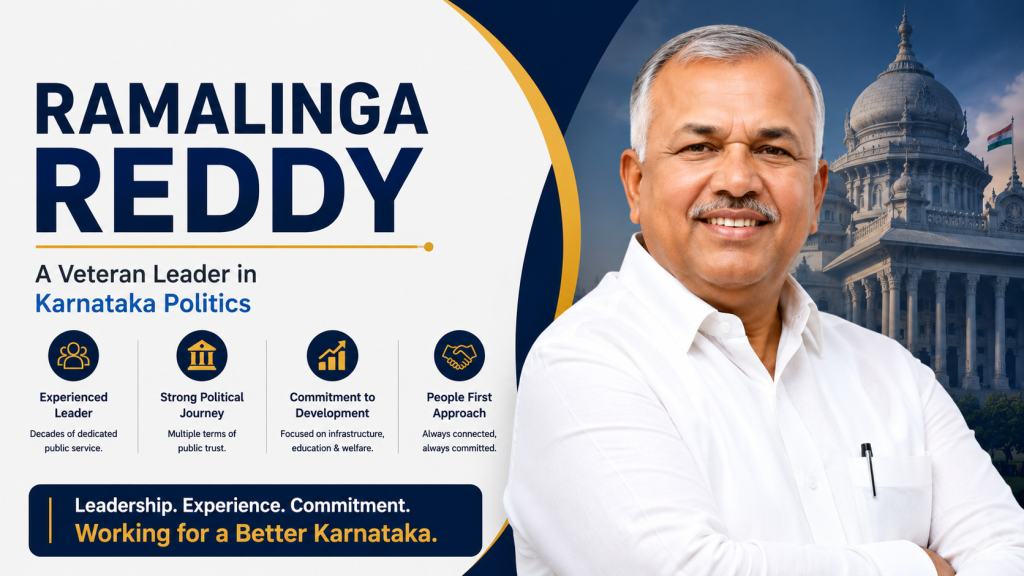
Ramalinga Reddy has played a significant role in Karnataka politics through decades of public service, leadership, and administrative experience. His political journey highlights the importance of governance, community engagement, and long-term commitment to public development.
Ramalinga Reddy: A Veteran Leader in Karnataka Politics
Introduction
Karnataka has produced several influential political leaders who have played significant roles in shaping the state’s governance, infrastructure, education, and public services. Among these leaders, Ramalinga Reddy has established a long and distinguished political career marked by public service, administrative experience, and strong grassroots connections.
Over the decades, Ramalinga Reddy has emerged as one of the prominent political figures in Karnataka, holding important ministerial portfolios and representing the interests of his constituents through multiple electoral victories. His political journey reflects persistence, leadership, and a deep understanding of public administration.
Known for his work in transportation, education, home affairs, and public welfare, Ramalinga Reddy has remained an active participant in Karnataka’s political landscape. His contributions have influenced policy discussions, governance initiatives, and development efforts across various sectors.
As Karnataka continues to evolve economically and socially, leaders with extensive administrative experience continue to play important roles in addressing challenges and supporting development. Understanding Ramalinga Reddy’s political career provides valuable insights into the functioning of state politics and public administration.
Early Life and Education
Ramalinga Reddy was born in Bengaluru, Karnataka, and pursued higher education before entering public life. His academic background and early involvement in student activities helped shape his leadership qualities and public engagement skills.
Like many successful political leaders, his early experiences exposed him to social issues, public concerns, and community development challenges.
These experiences would later influence his approach toward governance and policymaking.
Education often serves as a foundation for public leadership, and Ramalinga Reddy’s journey reflects the importance of understanding societal needs before entering active politics.
Entry into Politics
Ramalinga Reddy’s political career began through grassroots participation and local political activities.
Building strong connections with citizens allowed him to understand the challenges faced by communities at the ground level.
His ability to engage with people and address local concerns contributed significantly to his political growth.
Over time, he established himself as an influential leader within Karnataka politics and became associated with the Indian National Congress.
His political development demonstrates the importance of consistent public engagement and long-term commitment to community service.
Electoral Success and Public Support
One of the defining features of Ramalinga Reddy’s political career has been his repeated electoral success.
Winning elections consistently requires:
- Public trust
- Effective leadership
- Strong constituency engagement
- Continuous public service
His long-standing representation of constituencies in Bengaluru reflects sustained voter confidence in his leadership.
Electoral success is often built through years of relationship-building, responsiveness to public concerns, and visible development efforts.
His political career illustrates the importance of maintaining close connections with constituents.
Contributions to Karnataka Politics
Throughout his career, Ramalinga Reddy has contributed to various aspects of state governance.
His responsibilities have included involvement in:
- Transportation
- Education
- Home Affairs
- Public administration
- Civic development
Holding multiple ministerial positions has provided opportunities to influence policy implementation and administrative reforms.
Public administration requires balancing development goals with effective governance, and experienced leaders often play critical roles in this process.
His involvement across multiple sectors reflects a broad understanding of state-level governance.
Leadership in Transportation
Transportation infrastructure is a critical component of urban development.
Efficient transportation systems support:
- Economic growth
- Mobility
- Urban connectivity
- Public convenience
Ramalinga Reddy has been associated with transportation-related responsibilities in Karnataka, contributing to discussions around mobility and public transport systems.
As cities continue expanding, transportation remains an important policy area requiring long-term planning and investment.
Effective transportation management supports both economic activity and quality of life.
Role in Education and Public Services
Education remains one of the most important drivers of social and economic progress.
Throughout his political journey, Ramalinga Reddy has held responsibilities connected with education and public welfare initiatives.
Strong educational systems contribute to:
- Skill development
- Employment opportunities
- Economic advancement
- Social mobility
Public service initiatives aimed at improving educational outcomes can create long-term benefits for communities.
Leadership within these sectors often has lasting impacts on future generations.
Administrative Experience
Administrative experience is a valuable asset in public leadership.
Over the years, Ramalinga Reddy has managed various responsibilities requiring:
- Policy implementation
- Coordination
- Decision-making
- Governance oversight
Administrative roles provide leaders with practical understanding of how government systems operate.
Experience helps improve the ability to address complex challenges and implement effective solutions.
Strong governance depends on both vision and execution.
His career demonstrates the importance of administrative competence in public service.
Community Engagement
Successful political leadership often depends on community engagement.
Public representatives must remain connected with citizens and understand evolving concerns.
Community engagement involves:
- Listening to public feedback
- Addressing local issues
- Supporting development initiatives
- Encouraging participation
Leaders who maintain strong relationships with constituents often gain deeper insights into public priorities.
This engagement supports better decision-making and stronger public trust.
Grassroots connections remain an essential aspect of effective governance.
Challenges in Modern Governance
Modern governance presents numerous challenges.
These may include:
- Urban development
- Infrastructure requirements
- Economic growth
- Public service delivery
- Social welfare
Political leaders must navigate these complexities while balancing competing priorities.
Experience and adaptability are critical for addressing changing conditions.
Governance requires both strategic thinking and practical implementation.
Leaders with extensive experience often contribute valuable perspectives to policy discussions.
The Importance of Political Leadership
Political leadership influences the direction of public policy and development.
Effective leaders help create:
- Stable governance
- Economic opportunities
- Social progress
- Public confidence
Leadership involves making decisions that impact communities and future generations.
Public trust is built through accountability, transparency, and results.
The role of political leaders extends beyond elections into long-term nation-building efforts.
Strong leadership remains essential for sustainable development.
Public Service and Legacy
Public service is often measured by long-term contributions rather than short-term achievements.
Leaders who remain active across multiple decades contribute to institutional knowledge and governance continuity.
Legacy is shaped by:
- Public impact
- Policy contributions
- Community development
- Leadership effectiveness
Ramalinga Reddy’s career reflects sustained involvement in Karnataka’s political and administrative landscape.
Public service careers provide opportunities to influence positive change and support societal progress.
Long-term commitment often becomes one of the defining characteristics of respected leaders.
Future Outlook
As Karnataka continues evolving, experienced political leaders remain important contributors to governance and policy discussions.
Future priorities for state leadership may include:
- Infrastructure modernization
- Economic growth
- Urban planning
- Technology adoption
- Public welfare
The ability to adapt to changing conditions while maintaining focus on public needs will remain essential.
Political leadership will continue shaping the state’s development trajectory.
Experience, vision, and public engagement will remain important factors in effective governance.
Conclusion
Ramalinga Reddy’s political journey represents decades of public service, leadership, and administrative experience within Karnataka. Through electoral success, ministerial responsibilities, and community engagement, he has contributed to various aspects of governance and public administration.
His career highlights the importance of experience, public trust, and consistent engagement in political leadership. As Karnataka continues advancing economically and socially, leaders with deep administrative understanding continue playing significant roles in addressing challenges and supporting development.
The story of Ramalinga Reddy reflects broader themes of public service, governance, and leadership that remain central to democratic institutions and societal progress.