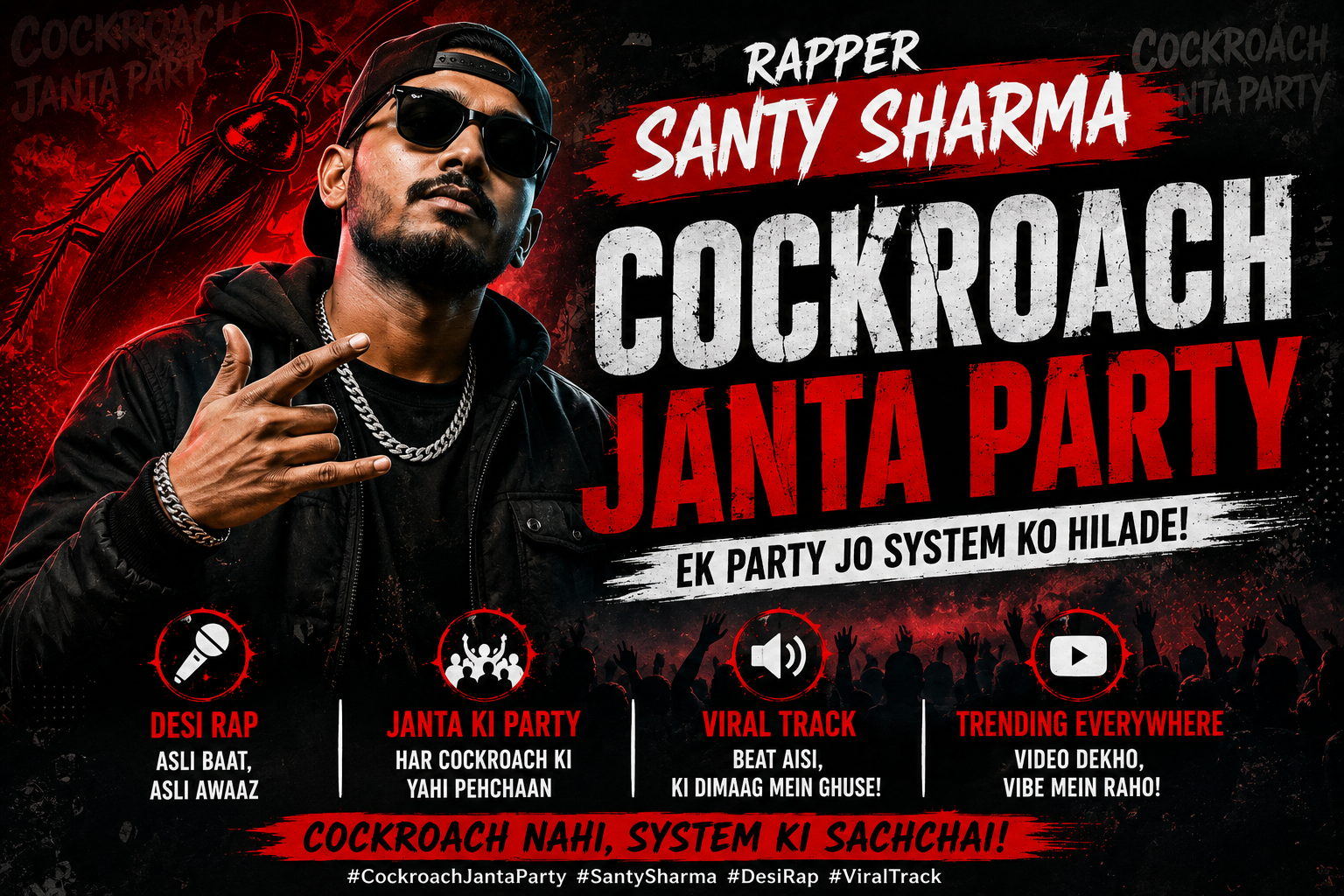
The digital entertainment industry in India is evolving rapidly, and internet-driven music culture has become one of the most powerful forces shaping youth entertainment today. Social media platforms, short-form videos, independent music channels, and meme culture are transforming how audiences consume content and how creators build popularity.
Among the many viral names gaining attention online, Rapper Santy Sharma and the phrase “Cockroach Janta Party” have become widely discussed topics across digital platforms. The trend has attracted significant audience engagement because of its unusual title, meme-friendly appeal, internet humor, and modern rap presentation style.
In the current era of viral entertainment, success often depends on uniqueness, relatability, and audience engagement rather than traditional media exposure. The growing popularity surrounding Santy Sharma reflects how internet culture is redefining modern music and entertainment trends in India.
Growth of Independent Rap Culture in India
Indian rap music has experienced massive growth over the last decade.
Earlier, mainstream Bollywood music dominated the industry, but digital platforms have opened opportunities for independent artists to reach large audiences directly.
Today, artists can publish music through:
- YouTube
- Instagram Reels
- Spotify
- Shorts
- Streaming platforms
without depending entirely on traditional record labels.
This digital shift has created a new generation of creators who combine:
- Music
- Internet humor
- Meme culture
- Social commentary
- Viral marketing
Santy Sharma represents this new wave of internet-era independent artists.
Why “Cockroach Janta Party” Became Viral
The phrase “Cockroach Janta Party” immediately attracts attention because it sounds unusual, humorous, and highly meme-oriented.
In the internet age, content often becomes viral because it:
- Sparks curiosity
- Feels unexpected
- Encourages social sharing
- Creates meme potential
Modern audiences are strongly attracted to unconventional titles and satirical presentation styles.
The trend gained engagement because people:
- Shared reactions
- Created memes
- Discussed the phrase online
- Used clips in short-form videos
This type of audience participation plays a major role in viral internet success.
Social Media and Instant Popularity
Social media has completely changed the entertainment industry.
Earlier, artists needed:
- Television exposure
- Film industry support
- Large promotional campaigns
to become popular.
Today, a single viral trend can generate millions of views within days.
Platforms such as:
- YouTube
- X
reward content that creates:
- Watch time
- Shares
- Comments
- Reactions
Viral engagement increases visibility rapidly, helping creators gain massive online audiences.
Santy Sharma’s internet popularity reflects the power of algorithm-driven entertainment culture.
Meme Culture and Modern Music
Meme culture is now deeply connected with music trends.
Many songs become popular because:
- Their lyrics are catchy
- Certain lines become memes
- Audiences remix the content
- Short-form videos increase reach
Internet audiences often enjoy content that combines:
- Humor
- Music
- Satire
- Relatable themes
This blend of entertainment and meme culture has become one of the strongest drivers of digital popularity.
The success of “Cockroach Janta Party” highlights how meme-friendly content performs strongly in modern internet ecosystems.
Youth Audiences and Digital Entertainment
Young audiences are the primary force behind internet trends.
Gen Z users consume content differently compared to previous generations.
They prefer:
- Fast entertainment
- Short-form videos
- Creative humor
- Interactive content
Youth audiences also enjoy content that feels:
- Authentic
- Unfiltered
- Different from mainstream media
Independent rap creators often connect strongly with younger viewers because their content feels more relatable and internet-native.
Rap Music as Digital Expression
Rap music has become one of the most influential forms of self-expression globally.
In India, rap culture continues growing because it allows creators to express:
- Personal opinions
- Social observations
- Internet humor
- Lifestyle experiences
Independent rap artists frequently experiment with:
- Unconventional lyrics
- Satirical themes
- Viral phrases
This freedom of creativity helps internet rap culture remain highly dynamic and engaging.
Branding in the Internet Era
Modern artists are not only musicians. They are also digital brands.
Successful internet creators focus heavily on:
- Visual identity
- Catchy names
- Viral presentation
- Social media strategy
Branding plays a huge role in attracting online audiences.
Unique names such as “Cockroach Janta Party” work effectively because they:
- Stand out instantly
- Trigger curiosity
- Create online discussion
Digital audiences remember unusual content more easily than generic content.
Viral Content and Audience Psychology
Viral trends often follow specific audience behavior patterns.
People are more likely to share content that:
- Feels funny
- Sounds surprising
- Creates emotional reactions
- Fits internet humor culture
Modern internet users also enjoy participating in trends by:
- Making memes
- Posting reactions
- Sharing edits
- Using trending audio
This participatory culture increases the lifespan of viral content.
Challenges of Internet Fame
Although viral success creates visibility, maintaining long-term popularity is challenging.
Internet creators often face:
- Audience pressure
- Fast-changing trends
- Online criticism
- Content expectations
Social media audiences move quickly toward new trends, making consistency extremely important.
Creators who remain innovative and adaptable are more likely to sustain long-term digital relevance.
Digital Economy and Creator Culture
The rise of viral creators has also changed the digital economy.
Online popularity now creates opportunities through:
- Sponsorships
- Advertising
- Music streaming
- Brand collaborations
- Event appearances
Digital entertainment has become a major business industry.
Independent creators can now build careers entirely through online platforms.
This transformation has reduced the gap between mainstream celebrities and internet personalities.
Satire and Internet Engagement
Satirical content performs strongly online because it encourages discussion and relatability.
Modern audiences often enjoy entertainment that mixes:
- Comedy
- Commentary
- Internet trends
- Creative storytelling
Satire creates stronger audience interaction because viewers actively react and participate in conversations around the content.
This style has become extremely common in modern rap and meme culture.
Short Video Platforms and Trend Growth
Short-form video platforms have accelerated trend cycles significantly.
A single phrase or audio clip can rapidly become popular because users:
- Reuse the sound
- Create edits
- Post reaction content
- Join trending challenges
This system helps music spread faster than traditional promotional methods.
Creators who understand short-form audience behavior often gain faster visibility online.
Internet Culture and Creative Freedom
The internet has increased creative freedom for artists.
Today, creators are not limited by:
- Traditional industry rules
- Corporate media structures
- Conventional formats
Independent creators can experiment with:
- Style
- Humor
- Presentation
- Themes
This freedom has helped internet entertainment become more diverse and unpredictable.
Future of Viral Rap Trends
The future of internet rap and meme-driven music trends will likely become even more:
- Fast-paced
- Interactive
- Community-driven
- Digitally optimized
Artificial intelligence, social media algorithms, and content recommendation systems will continue influencing music discovery.
Creators who understand internet culture deeply may continue dominating digital engagement.
Conclusion
Rapper Santy Sharma and the viral popularity of “Cockroach Janta Party” represent the growing influence of internet culture, independent rap music, and meme-based entertainment in India’s digital ecosystem.
Modern entertainment is no longer controlled only by traditional media industries. Social media audiences now play a major role in deciding what becomes popular online.
The rise of unusual, humorous, and highly shareable content highlights how digital audiences increasingly value creativity, relatability, and internet-driven engagement.
As online entertainment continues evolving, creators who successfully combine music, branding, humor, and audience interaction may continue shaping the future of digital entertainment culture in India.