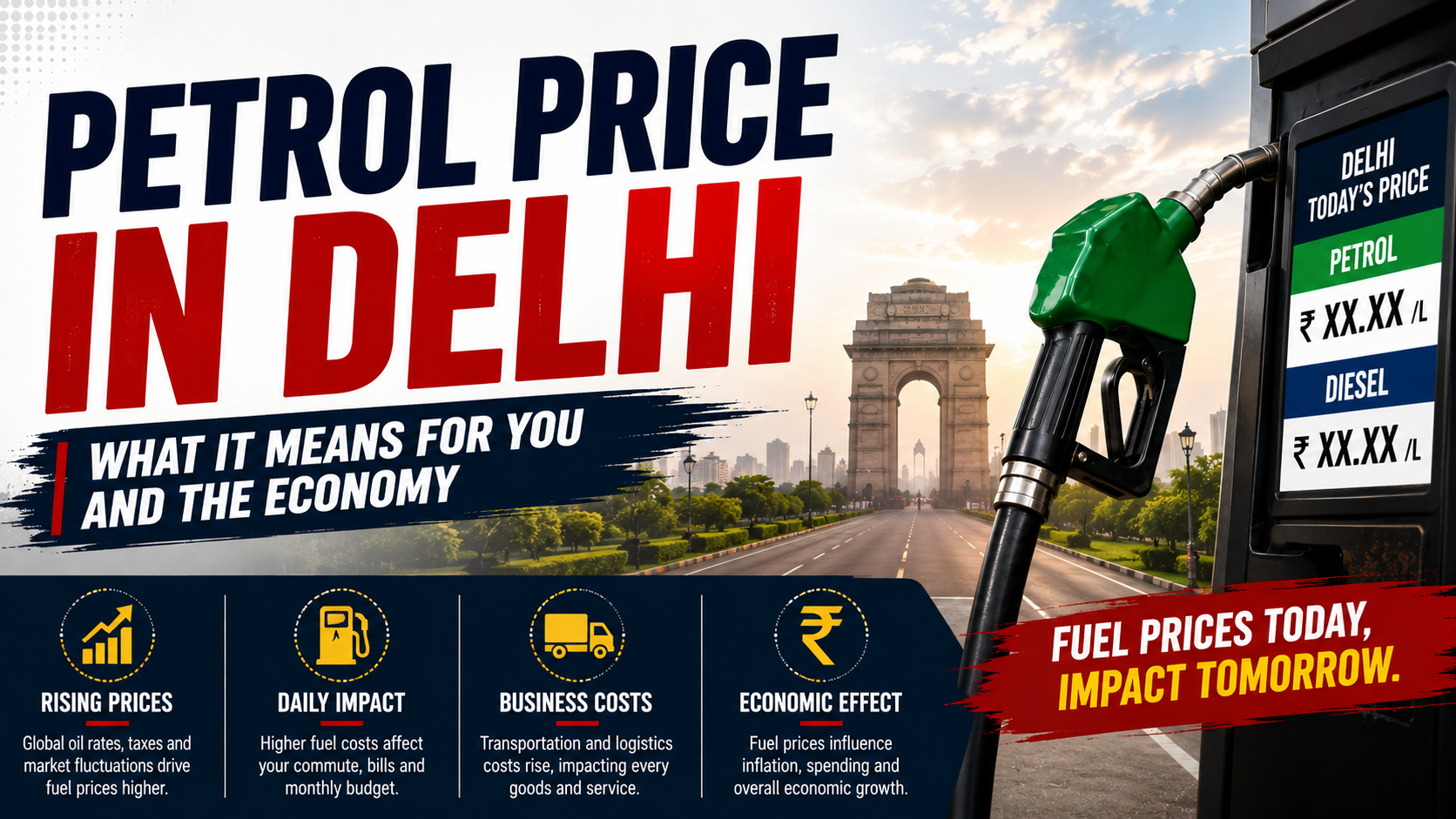
Petrol prices have become one of the most important economic topics in India, especially in metropolitan cities like Delhi. Fuel is not just a transportation necessity anymore; it directly affects household expenses, business operations, inflation, logistics, and overall economic activity. Whenever petrol prices rise or fall, millions of people feel the impact immediately.
Delhi, being the national capital and one of the busiest urban centers in India, depends heavily on transportation systems powered by petrol and diesel. From office commuters and delivery services to public transport and private vehicle owners, fuel plays a major role in keeping the city moving efficiently.
In recent years, discussions around petrol prices have increased because fuel costs influence almost every sector of the economy. Rising prices create financial pressure on households, businesses, and transportation industries, while lower prices often improve spending power and economic confidence.
Understanding why petrol prices change and how they affect the economy is important for every citizen in modern India.
Importance of Petrol in Modern Urban Life
Petrol is one of the most essential energy resources in modern society.
It supports:
- Daily transportation
- Logistics operations
- Public mobility
- Delivery systems
- Commercial transportation
Without fuel, urban economies cannot function efficiently.
Delhi has millions of vehicles operating every day, including:
- Cars
- Motorcycles
- Taxis
- Ride-sharing vehicles
- Commercial delivery vehicles
Because of this massive transportation demand, petrol prices directly affect the city’s economic rhythm.
Why Petrol Prices Increase
Petrol prices in Delhi are influenced by multiple domestic and international factors.
Major reasons include:
- Global crude oil prices
- Currency exchange rates
- Government taxes
- Transportation and refining costs
- International market conditions
India imports a significant amount of crude oil from global markets. Therefore, any rise in international crude oil prices affects domestic fuel prices.
When global oil-producing nations reduce supply or international conflicts create uncertainty, oil prices often rise globally, increasing fuel prices in India.
Role of Crude Oil in Fuel Pricing
Crude oil is the raw material used to produce petrol and diesel.
International crude oil prices depend on:
- Global demand
- Production levels
- Geopolitical tensions
- Economic conditions
- Supply chain disruptions
When crude oil becomes expensive, refining companies face higher production costs, which eventually increase retail fuel prices.
Since India relies heavily on imported oil, global energy markets significantly influence petrol prices in Delhi.
Taxes and Petrol Prices
Taxes form a major portion of petrol prices in India.
Fuel prices generally include:
- Central government excise duty
- State government VAT
- Dealer commission
- Transportation charges
Different states have different tax structures, which is why petrol prices vary across cities.
Delhi’s petrol pricing is closely monitored because it reflects both national fuel policies and urban consumption patterns.
Fuel taxation is an important source of government revenue, but it also affects affordability for consumers.
Impact on Household Budgets
Rising petrol prices directly affect household expenses.
When fuel costs increase:
- Daily commuting becomes expensive
- Transportation budgets rise
- Delivery charges increase
- Cost of living becomes higher
Middle-class families and salaried employees often experience the strongest financial pressure because transportation is a necessary part of daily life.
Higher fuel prices can reduce disposable income and affect consumer spending patterns.
Petrol Prices and Inflation
Fuel prices are closely linked with inflation.
Transportation costs affect the prices of:
- Food products
- Consumer goods
- E-commerce deliveries
- Essential supplies
When petrol prices rise, businesses often increase product prices to cover transportation expenses.
This creates inflationary pressure across the economy.
As logistics costs increase, the prices of everyday goods may also rise, affecting consumers nationwide.
Business and Logistics Impact
Businesses depend heavily on transportation systems.
Fuel price increases affect:
- Delivery services
- Supply chains
- Freight movement
- Commercial transport
E-commerce companies, courier services, and logistics operators often face higher operating expenses during periods of rising fuel costs.
Small businesses can also struggle because transportation becomes more expensive.
In a large commercial city like Delhi, fuel pricing has a direct impact on business efficiency.
Daily Commuters and Transportation Costs
Delhi has one of the largest populations of daily commuters in India.
Millions of people travel daily for:
- Office work
- Education
- Business activities
Higher petrol prices increase monthly transportation expenses for:
- Car owners
- Motorcycle riders
- Taxi users
Many commuters begin focusing more on:
- Fuel efficiency
- Public transport
- Shared mobility options
Transportation costs are becoming an increasingly important financial consideration in urban life.
Public Transport and Fuel Dependency
Public transportation systems are also influenced by fuel prices.
Commercial operators such as:
- Auto-rickshaws
- Taxi services
- Bus systems
often face rising operational costs when fuel prices increase.
This may lead to:
- Higher fares
- Increased transportation expenses
- Financial pressure on transport workers
Fuel pricing directly affects urban mobility systems.
Environmental Concerns and Fuel Usage
Petrol consumption also raises environmental concerns.
Fuel-powered transportation contributes significantly to:
- Air pollution
- Carbon emissions
- Urban environmental stress
Delhi already faces major air quality challenges, making sustainable transportation an important long-term goal.
Governments and urban planners are increasingly promoting:
- Electric vehicles
- Public transport
- Cleaner energy alternatives
to reduce fuel dependency and pollution levels.
Rise of Electric Vehicles
One major effect of rising petrol prices is increased interest in electric vehicles.
Consumers are increasingly exploring:
- Electric scooters
- Electric cars
- Hybrid vehicles
Electric mobility is often viewed as:
- Cost-efficient
- Environment-friendly
- Sustainable
Government initiatives supporting electric vehicle adoption may reduce future dependence on petrol-based transportation.
However, petrol continues to dominate India’s transportation sector.
Global Events and Fuel Markets
International events strongly influence fuel prices.
Factors such as:
- Wars
- Global trade tensions
- Oil supply disruptions
- Economic slowdowns
can quickly impact crude oil prices worldwide.
Since India imports oil, global instability often leads to domestic fuel price changes.
Fuel markets are deeply connected with international politics and global economic conditions.
Government Policies and Fuel Management
Fuel pricing also depends heavily on government policies.
Authorities manage fuel-related decisions through:
- Tax adjustments
- Energy strategies
- Import management
- Infrastructure planning
Balancing consumer affordability with revenue generation is often a major economic challenge.
Fuel pricing decisions influence both economic planning and public sentiment.
Petrol Prices and Urban Economy
Delhi’s economy depends heavily on mobility and transportation.
Fuel prices affect:
- Commercial activity
- Logistics systems
- Consumer behavior
- Transportation industries
Higher transportation expenses can reduce purchasing power for many individuals.
Fuel pricing is therefore an important economic indicator in large metropolitan cities.
Future of Fuel and Energy Transition
The future of transportation is gradually moving toward cleaner and more sustainable energy solutions.
Emerging trends include:
- Electric mobility
- Hydrogen fuel systems
- Smart transport technology
- Renewable energy infrastructure
Technology is expected to reduce long-term dependence on traditional fuel systems.
However, petrol remains one of the most critical energy resources in India today.
Consumer Awareness and Fuel Efficiency
Rising petrol prices have increased awareness around fuel efficiency.
Consumers are becoming more conscious about:
- Vehicle mileage
- Driving habits
- Fuel-saving methods
People increasingly prefer:
- Fuel-efficient vehicles
- Shared transportation
- Public transit systems
Financial awareness related to transportation costs is becoming more important in urban lifestyles.
Conclusion
Petrol prices in Delhi are not just economic statistics. They directly influence transportation, household budgets, businesses, inflation, and urban life. As one of India’s largest and busiest cities, Delhi reflects how fuel pricing affects both economic systems and daily living.
Global oil prices, taxation policies, transportation demand, and international economic conditions all contribute to fuel price fluctuations. Rising petrol costs impact millions of commuters and businesses, while also shaping broader economic trends.
As India continues modernizing its transportation systems and investing in sustainable mobility solutions, the future of fuel management and energy efficiency will remain an important part of economic planning and urban development.