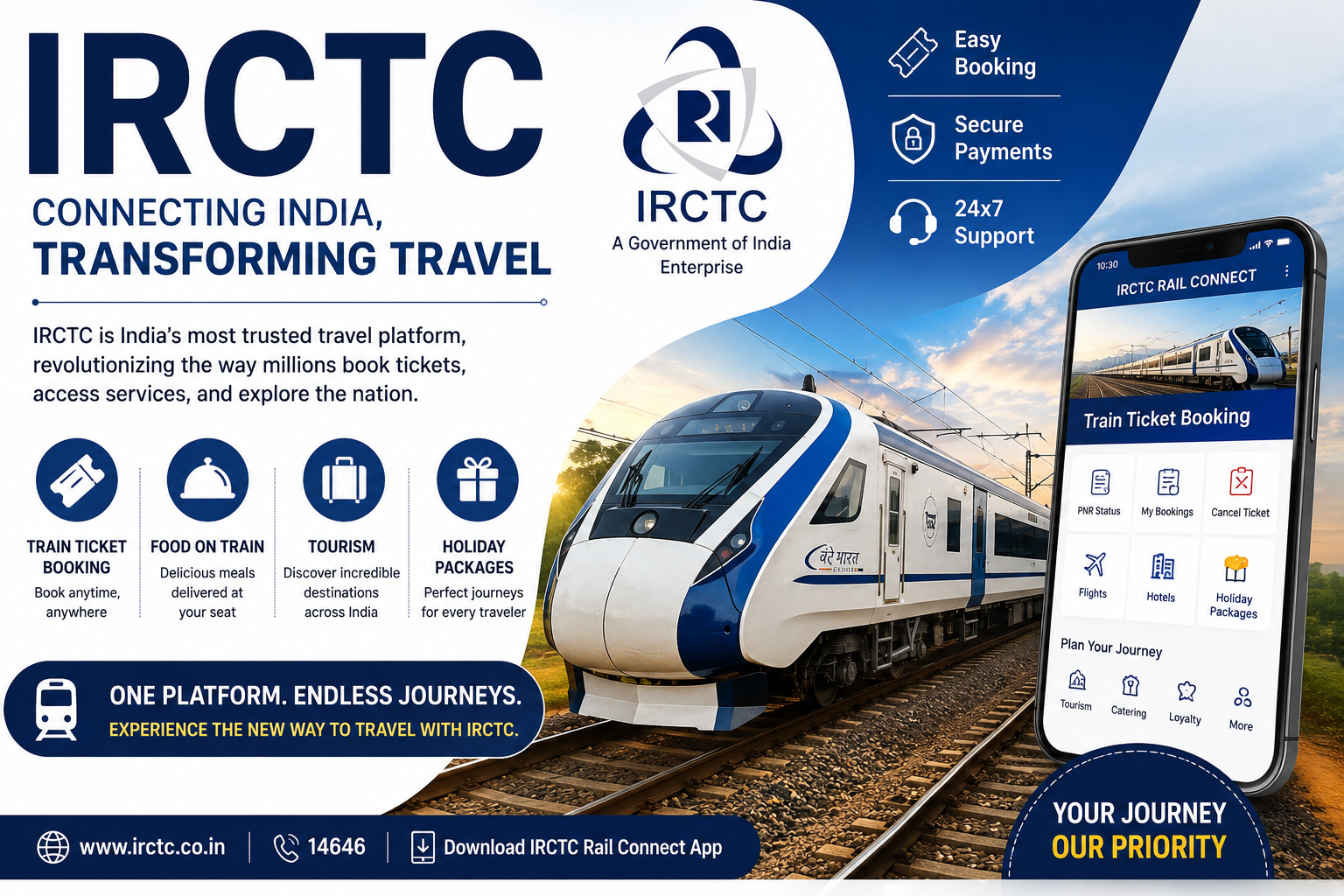
The Indian Railway Catering and Tourism Corporation (IRCTC) has become one of the most recognizable organizations in India’s transportation and tourism ecosystem. As a subsidiary of Indian Railways, IRCTC has transformed how millions of passengers book train tickets, access catering services, and plan travel experiences across the country.
Over the years, IRCTC has evolved from a ticket booking platform into a comprehensive travel and tourism service provider. Through digital innovation, technological advancements, and customer-focused solutions, the organization has played a significant role in modernizing railway travel in India.
Today, millions of passengers rely on IRCTC’s online platforms for ticket reservations, tourism packages, food delivery services, and travel-related information. Its digital infrastructure has helped simplify travel planning while improving convenience and accessibility for passengers across the nation.
As India’s transportation sector continues to embrace digital transformation, IRCTC remains a key example of how technology can enhance public services and improve customer experiences.
The Origin of IRCTC
IRCTC was established to improve the efficiency and quality of railway-related services.
The organization was created with objectives such as:
- Online ticket booking
- Catering management
- Tourism promotion
- Passenger convenience
Before the introduction of digital booking systems, railway reservations often involved long queues and manual processes.
The development of online booking platforms significantly improved accessibility and simplified travel planning for millions of passengers.
IRCTC became one of the earliest large-scale digital service platforms in India.
Revolutionizing Train Ticket Booking
One of IRCTC’s most significant achievements is the transformation of railway ticket reservations.
Passengers can now:
- Book tickets online
- Check seat availability
- Monitor booking status
- Access travel information
- Manage reservations digitally
The online reservation system has reduced dependence on physical booking counters and improved overall convenience.
Digital ticketing has become an essential part of India’s transportation infrastructure.
The platform continues to serve millions of users every day.
Digital Transformation in Railway Services
Technology has played a major role in IRCTC’s growth.
Digital initiatives include:
- Mobile applications
- Online payment systems
- Real-time booking updates
- Automated services
These technologies help passengers access railway services from virtually anywhere.
The integration of digital tools has improved efficiency while enhancing the user experience.
IRCTC’s success reflects the growing importance of digital transformation within public sector services.
Enhancing Passenger Convenience
Modern travelers expect convenience, speed, and accessibility.
IRCTC addresses these expectations through:
- Easy booking interfaces
- Mobile accessibility
- Secure payment options
- Instant booking confirmations
Passengers can plan journeys, make payments, and manage bookings using smartphones and computers.
These services have significantly improved the travel experience for millions of railway passengers.
Customer convenience remains a central focus of IRCTC’s operations.
Catering Services and Food Delivery
IRCTC is also responsible for catering services within the railway network.
Food-related services include:
- Onboard catering
- Station food services
- Online food ordering
Passengers can access a variety of meal options while traveling.
Digital ordering systems have improved food accessibility and convenience.
Catering services contribute significantly to passenger satisfaction during long-distance journeys.
The organization continues exploring ways to improve service quality and customer experiences.
Tourism and Travel Packages
Beyond railway services, IRCTC plays an important role in India’s tourism sector.
The organization offers:
- Domestic tour packages
- Pilgrimage tours
- Luxury train experiences
- Holiday packages
Tourism services help travelers explore different regions of India through organized and convenient travel arrangements.
The tourism division contributes to promoting cultural, historical, and spiritual destinations across the country.
Travel packages provide integrated solutions for transportation, accommodation, and sightseeing.
Technology and Innovation
Innovation remains a key driver of IRCTC’s development.
Technological advancements include:
- Mobile ticketing
- Cloud-based systems
- Secure payment gateways
- Real-time data management
Modern technology helps improve scalability and operational efficiency.
As passenger demand grows, technological innovation remains essential for maintaining service quality and reliability.
Digital infrastructure supports millions of transactions and customer interactions daily.
Importance in India’s Transportation Ecosystem
Indian Railways is one of the largest railway networks in the world.
IRCTC supports this ecosystem by providing essential services that improve passenger experiences.
Its contributions include:
- Reservation management
- Digital accessibility
- Travel planning
- Tourism promotion
The organization’s role extends beyond ticket booking.
It serves as an important bridge between technology and public transportation services.
Its impact is visible across the entire travel lifecycle.
Customer Experience and Service Quality
Customer satisfaction plays a major role in the success of any service platform.
IRCTC continuously focuses on:
- Improving usability
- Enhancing reliability
- Expanding digital services
- Strengthening support systems
Modern customers expect seamless experiences, and technology helps organizations meet these expectations.
Service quality improvements contribute to increased trust and user adoption.
The organization continues evolving based on changing passenger requirements.
Economic and Social Impact
IRCTC contributes to India’s economy in multiple ways.
Its services support:
- Tourism growth
- Transportation efficiency
- Digital adoption
- Employment generation
The platform helps facilitate travel for millions of people each year.
Efficient transportation systems play an important role in economic development and regional connectivity.
Digital service platforms like IRCTC contribute to broader national development goals.
Future Opportunities
The future of IRCTC is closely linked to technological innovation and passenger expectations.
Potential areas of growth include:
- Artificial Intelligence integration
- Personalized travel services
- Enhanced mobile experiences
- Smart railway technologies
As digital transformation accelerates, opportunities for service enhancement continue expanding.
Organizations that embrace innovation are better positioned to meet future demands.
IRCTC’s technology-driven approach supports long-term growth and modernization.
The Role of Artificial Intelligence
Artificial Intelligence has the potential to improve railway-related services.
Possible applications include:
- Personalized recommendations
- Automated customer support
- Predictive analytics
- Operational optimization
AI-driven solutions can enhance efficiency while improving passenger experiences.
Technology continues creating opportunities for smarter and more responsive travel services.
Future innovations may further transform how travelers interact with railway systems.
Conclusion
IRCTC has become a vital component of India’s transportation and tourism ecosystem. Through digital innovation, technology adoption, and customer-focused services, the organization has transformed how millions of passengers plan and experience railway travel.
From online ticket booking and catering services to tourism packages and digital convenience, IRCTC continues playing a critical role in modernizing railway services across India.
As technology continues evolving, the organization is well-positioned to expand its capabilities and further enhance passenger experiences. Its journey demonstrates how digital transformation can improve public services, increase accessibility, and support national growth.