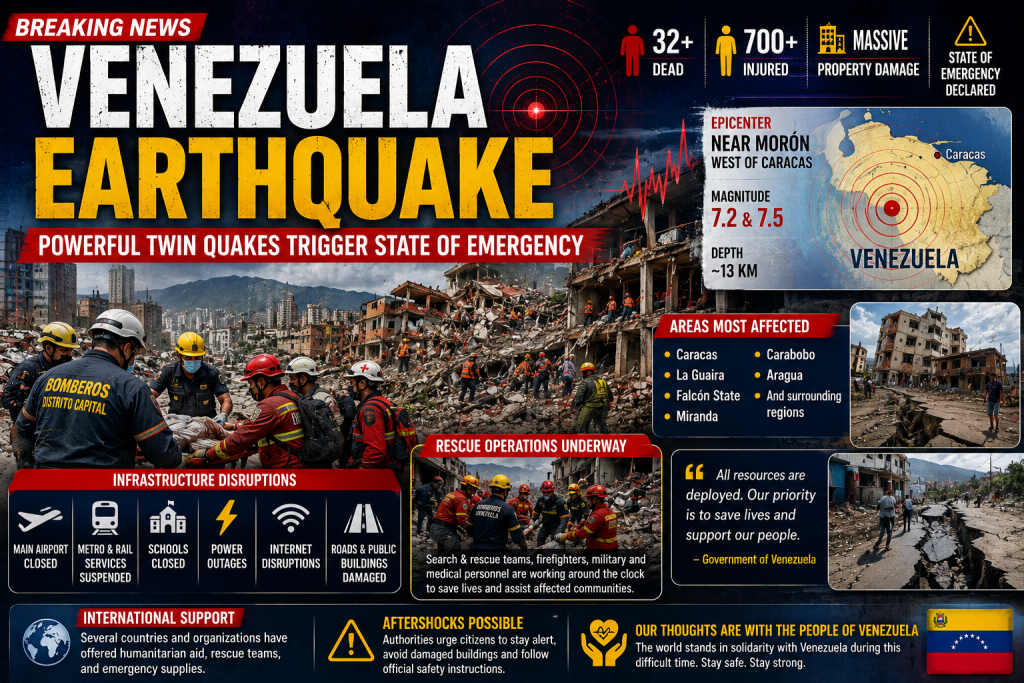
Venezuela has been hit by two powerful earthquakes that caused widespread destruction across several regions, particularly around the capital, Caracas. The back-to-back seismic events resulted in collapsed buildings, damaged infrastructure, and large-scale emergency response operations.
Authorities declared a nationwide state of emergency as rescue teams searched for survivors trapped beneath debris. The earthquakes have become one of the country’s most significant natural disasters in recent years.
Twin Earthquakes Strike Venezuela
According to the U.S. Geological Survey (USGS), Venezuela experienced two major earthquakes in quick succession.
- First earthquake: Magnitude 7.2
- Second earthquake: Magnitude 7.5
- Epicenter: Near Morón, west of Caracas
- Depth: Approximately 13 km
The powerful shaking was felt across much of northern Venezuela and in neighboring Caribbean regions.
State of Emergency Declared
Following the disaster, Venezuelan authorities declared a nationwide state of emergency.
Emergency agencies were mobilized immediately to:
- Conduct search and rescue operations
- Assist injured residents
- Assess damaged infrastructure
- Restore essential public services
- Coordinate international humanitarian assistance
Officials urged residents to remain away from damaged buildings due to the risk of aftershocks.
Casualties and Damage
Early official reports indicate:
- At least 32 people have died
- More than 700 people have been injured
- Multiple residential and commercial buildings have collapsed
- Rescue teams continue searching for survivors
Authorities cautioned that casualty figures may rise as emergency crews reach severely affected areas.
Areas Most Affected
The strongest damage has been reported in and around:
- Caracas
- La Guaira
- Falcón State
- Miranda
- Carabobo
- Aragua
Several neighborhoods experienced structural failures, while emergency workers continue inspecting buildings for safety.
Infrastructure Disruptions
The earthquakes significantly disrupted public infrastructure.
Reported impacts include:
- Closure of Caracas’ main airport after structural damage
- Suspension of metro and rail services
- School closures
- Local power and internet disruptions
- Damage to roads and public buildings
These disruptions have complicated rescue and relief efforts.
Rescue Operations Continue
Emergency responders, firefighters, medical teams, and military personnel remain deployed across affected areas.
Current priorities include:
- Locating trapped survivors
- Providing emergency medical treatment
- Delivering humanitarian assistance
- Evaluating damaged structures
- Restoring critical infrastructure
International rescue teams have also begun arriving to support recovery efforts.
International Response
Several countries and international organizations have expressed solidarity with Venezuela.
Governments have offered:
- Search-and-rescue teams
- Medical assistance
- Humanitarian supplies
- Technical support
The United States announced emergency assistance, while leaders from several nations conveyed condolences and pledged support.
Risk of Aftershocks
Seismologists warn that additional aftershocks remain possible following such powerful earthquakes.
Authorities continue advising residents to:
- Avoid damaged buildings
- Follow official emergency instructions
- Prepare emergency supplies
- Stay informed through government updates
Safety remains the highest priority as assessments continue.
Why Venezuela Experiences Earthquakes
Venezuela lies near the boundary between the Caribbean Plate and the South American Plate, making parts of the country vulnerable to seismic activity.
Although destructive earthquakes are less frequent than in some neighboring countries, significant events have occurred throughout Venezuela’s history due to ongoing tectonic movement.
Conclusion
The powerful twin earthquakes in Venezuela have caused widespread devastation, resulting in dozens of deaths, hundreds of injuries, and extensive damage to homes and infrastructure. Rescue teams continue working around the clock as authorities assess the full scale of the disaster and coordinate relief efforts.
As recovery operations continue, officials remain focused on saving lives, restoring essential services, and helping affected communities rebuild. The disaster serves as a reminder of the importance of disaster preparedness and resilient infrastructure in earthquake-prone regions.