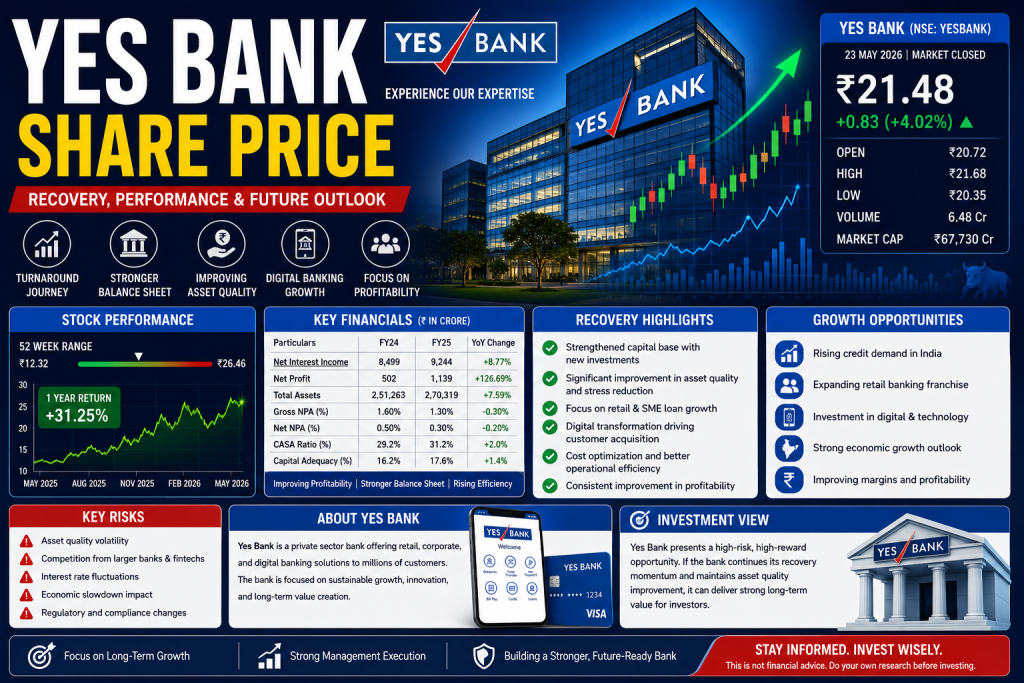
Yes Bank remains one of the most closely watched banking stocks in India. Over the years, the bank has experienced significant challenges, major restructuring efforts, and a gradual recovery process that continues to attract investor attention. As a result, the Yes Bank share price frequently becomes a trending topic among retail investors, traders, and market analysts.
Many investors view Yes Bank as a turnaround story, while others remain cautious due to past financial difficulties. Understanding the bank’s recovery journey, business performance, opportunities, and risks is essential before making any investment decision.
About Yes Bank
Yes Bank is one of India’s leading private-sector banks offering a wide range of financial services.
Its services include:
- Retail banking
- Corporate banking
- Digital banking
- Wealth management
- Loans and credit facilities
- Treasury operations
The bank serves millions of customers across India through branches, ATMs, and digital banking platforms.
Why Investors Follow Yes Bank Share Price
Turnaround Story
Yes Bank has undergone a significant restructuring process in recent years, making it one of the most discussed recovery stories in the Indian banking sector.
Retail Investor Interest
The stock remains popular among retail investors because of its relatively affordable share price and recovery potential.
Banking Sector Growth
India’s expanding economy creates long-term opportunities for banks through increased lending and financial inclusion.
Market Sentiment
News related to profitability, asset quality, and business growth often impacts investor confidence.
Factors Affecting Yes Bank Share Price
Several factors influence the movement of Yes Bank shares.
1. Financial Results
Quarterly earnings, revenue growth, and profitability remain major drivers of stock performance.
2. Asset Quality
Investors closely monitor non-performing assets (NPAs) and loan recovery trends.
3. Credit Growth
The bank’s ability to grow loans while maintaining healthy asset quality is crucial.
4. Interest Rate Environment
Changes in interest rates affect banking profitability and lending activity.
5. Economic Growth
A strong economy generally supports increased borrowing, spending, and banking activity.
Recovery Journey of Yes Bank
The bank faced significant challenges that led to regulatory intervention and restructuring efforts.
Since then, several measures have contributed to recovery:
Capital Support
New investments and institutional support strengthened the bank’s capital position.
Management Changes
Leadership restructuring helped improve governance and operational oversight.
Balance Sheet Improvement
The bank has focused on improving asset quality and reducing stressed assets.
Digital Banking Growth
Investment in technology and digital services has supported customer engagement and operational efficiency.
Strengths of Yes Bank
Established Banking Network
The bank maintains a significant presence across India.
Digital Banking Capabilities
Technology investments continue improving customer experience and service delivery.
Growing Retail Focus
Expansion in retail banking can support long-term revenue growth.
Economic Tailwinds
India’s growing economy provides opportunities for increased banking penetration.
Risks Investors Should Consider
Historical Challenges
Past financial issues continue to influence investor perception.
Asset Quality Risks
Banks must continuously manage credit risk and loan performance.
Competition
The Indian banking sector remains highly competitive, with strong public and private players.
Regulatory Oversight
Banking operations are heavily regulated, and policy changes can affect profitability.
Market Volatility
Banking stocks can be sensitive to economic conditions and investor sentiment.
Yes Bank and the Indian Banking Sector
India’s banking industry continues to benefit from:
- Economic growth
- Rising credit demand
- Digital financial adoption
- Government financial inclusion initiatives
- Expanding consumer markets
As banking penetration increases, financial institutions may experience additional growth opportunities.
Long-Term Investment Perspective
Investors evaluating Yes Bank often consider:
Potential Benefits
- Recovery-driven growth opportunities
- Expanding banking sector
- Digital transformation initiatives
- Improved operational performance
Key Considerations
- Asset quality trends
- Sustainable profitability
- Capital adequacy
- Management execution
Long-term success depends on consistent financial improvement rather than short-term market movements.
Future Outlook for Yes Bank Share Price
Several factors could influence future stock performance:
- Loan growth
- Deposit expansion
- Profitability improvements
- Digital banking adoption
- Economic growth
- Banking sector conditions
If the bank continues strengthening its balance sheet and improving business fundamentals, investor confidence may continue improving over time.
Should Investors Consider Yes Bank?
Yes Bank appeals to investors interested in banking-sector turnaround opportunities. However, investors should carefully evaluate:
- Financial statements
- Asset quality reports
- Quarterly earnings
- Industry conditions
- Risk tolerance
Diversification and thorough research remain important when investing in banking stocks.
Conclusion
Yes Bank remains one of India’s most closely monitored banking stocks due to its recovery journey and future growth potential. The Yes Bank share price reflects investor expectations regarding business performance, profitability improvements, and the bank’s ability to sustain its turnaround efforts.
While challenges remain, the bank’s restructuring efforts, digital initiatives, and participation in India’s growing financial sector provide opportunities for future growth. Investors should continue monitoring financial performance and banking industry developments before making investment decisions.