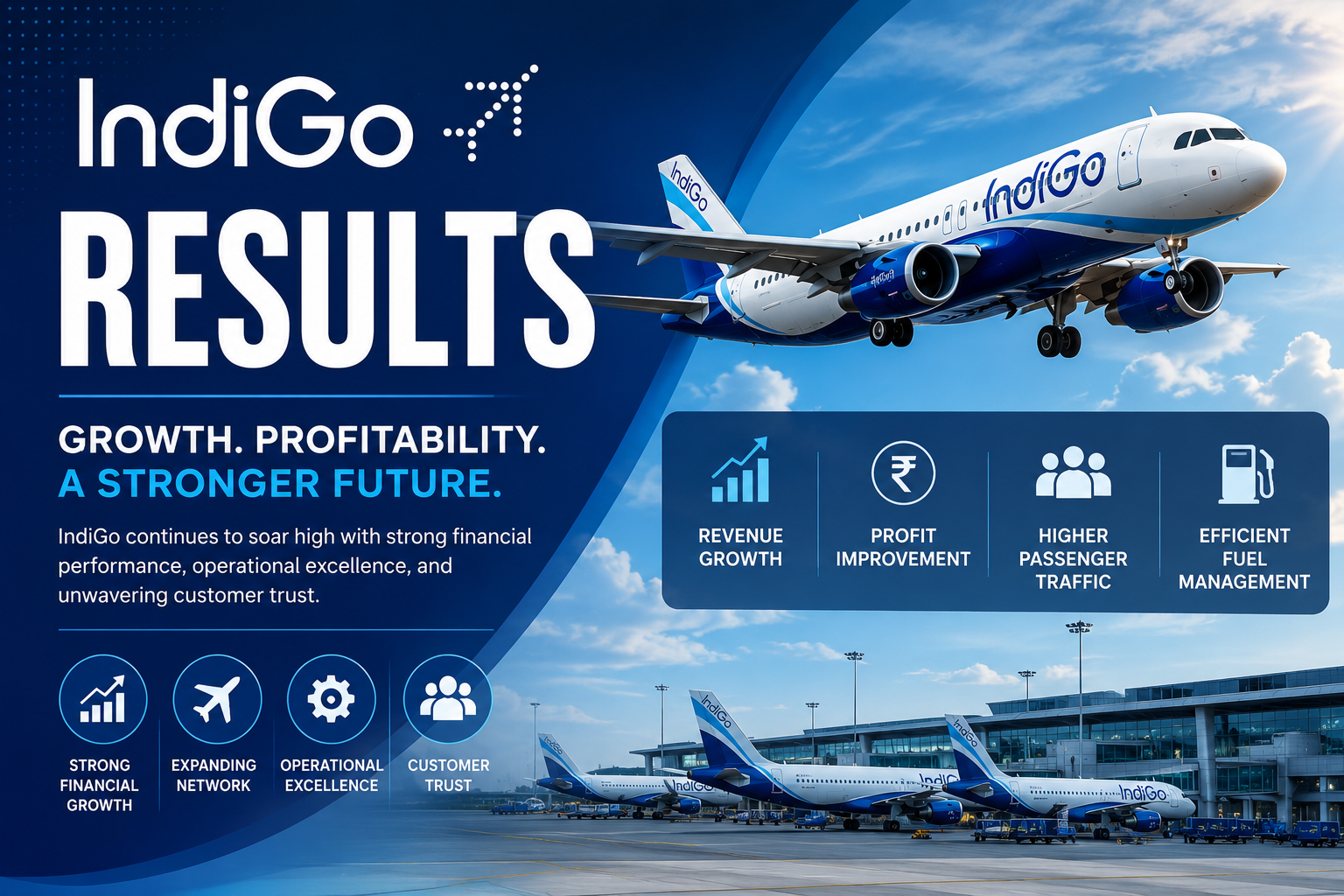
India’s aviation industry has witnessed remarkable transformation over the last decade, and IndiGo has emerged as one of the strongest and most influential players in the sector. As India’s largest airline by market share, IndiGo continues to attract attention from investors, business analysts, travelers, and industry experts because of its operational efficiency, aggressive expansion strategy, and financial performance.
The recent IndiGo results have once again highlighted the company’s growing dominance in the Indian aviation market. Despite global economic uncertainty, rising fuel costs, intense competition, and operational challenges in the airline industry, IndiGo has managed to maintain strong business momentum.
The company’s financial performance reflects not only operational strength but also the increasing demand for air travel in India. As domestic and international aviation markets continue expanding, IndiGo’s growth story represents the larger transformation of India’s travel and transportation ecosystem.
IndiGo’s Position in the Indian Aviation Industry
IndiGo has built a strong reputation as a low-cost airline that focuses on:
- Operational efficiency
- Affordable pricing
- Wide network coverage
- On-time performance
- Scalable business operations
The airline has consistently maintained one of the highest market shares in India’s domestic aviation sector.
Its large fleet size, route expansion strategy, and strong customer base have helped the company strengthen its leadership position over competitors.
Over the years, IndiGo has become one of the most recognizable aviation brands in India.
Strong Financial Performance
The latest IndiGo financial results indicate strong business recovery and operational growth.
Several factors have contributed to improved financial performance:
- Increase in passenger traffic
- Higher travel demand
- Better operational efficiency
- Expansion of domestic and international routes
- Improved revenue management
The aviation sector experienced significant disruptions during global travel restrictions and economic slowdowns. However, IndiGo has shown resilience through strategic planning and cost management.
Its financial performance demonstrates the growing recovery of India’s aviation market.
Rising Demand for Air Travel in India
One of the major reasons behind IndiGo’s growth is the increasing demand for air travel across India.
Several factors are driving this trend:
- Growth of middle-class population
- Rising disposable incomes
- Expansion of tourism
- Improved airport infrastructure
- Business travel growth
India is becoming one of the fastest-growing aviation markets globally.
As more people choose air travel for convenience and accessibility, airlines like IndiGo continue benefiting from expanding passenger demand.
Fleet Expansion Strategy
IndiGo has consistently invested in fleet expansion to support future growth.
The airline continues adding new aircraft to:
- Increase operational capacity
- Expand route networks
- Improve fuel efficiency
- Strengthen international operations
Modern aircraft also help reduce maintenance costs and improve customer experience.
Fleet expansion is one of the key reasons IndiGo remains competitive in the aviation industry.
Its long-term aircraft acquisition strategy reflects confidence in future travel demand.
Focus on Operational Efficiency
Operational efficiency has been one of IndiGo’s strongest advantages.
The company focuses heavily on:
- Cost optimization
- Fast turnaround times
- Efficient scheduling
- Standardized fleet operations
Low-cost airlines depend heavily on operational discipline to maintain profitability.
IndiGo’s ability to manage operations efficiently has helped it maintain strong margins even during challenging market conditions.
This operational model has become one of the company’s core competitive strengths.
Expansion in International Markets
IndiGo is increasingly focusing on international expansion.
The airline has been strengthening routes connecting India with:
- Middle East
- Southeast Asia
- Europe
- Other international destinations
International operations provide opportunities for:
- Revenue diversification
- Global brand visibility
- Passenger growth
As India’s international travel market expands, IndiGo may continue increasing its presence in global aviation routes.
International growth could become a major driver of long-term revenue.
Technology and Digital Transformation
Technology is becoming increasingly important in the aviation industry.
IndiGo has invested in:
- Digital booking systems
- Mobile applications
- Customer support systems
- Data-driven operations
Digital platforms improve:
- Customer convenience
- Booking efficiency
- Operational management
Modern travelers expect smooth digital experiences throughout the travel journey.
Technology investments help airlines improve both operational performance and customer satisfaction.
Challenges in the Aviation Industry
Despite strong results, the aviation sector continues facing multiple challenges.
These include:
- Rising fuel prices
- Currency fluctuations
- Infrastructure limitations
- Global economic uncertainty
- Competitive pricing pressures
Fuel costs remain one of the biggest expenses for airlines worldwide.
Changes in oil prices can significantly impact airline profitability.
Airlines must continuously balance growth, pricing, operational efficiency, and customer expectations.
Competitive Landscape
India’s aviation industry remains highly competitive.
IndiGo competes with:
- Air India
- Akasa Air
- SpiceJet
- International carriers
Competition often leads to pricing pressure and operational challenges.
However, IndiGo’s scale, network strength, and operational efficiency have helped it maintain strong market leadership.
Its brand recognition and customer loyalty also contribute to long-term stability.
Investor Confidence and Market Perception
IndiGo’s financial performance often influences investor sentiment toward the aviation industry.
Strong quarterly results usually reflect:
- Positive travel demand
- Business recovery
- Industry growth potential
Investors closely monitor:
- Revenue growth
- Passenger numbers
- Profit margins
- Expansion strategies
IndiGo’s consistent growth has helped strengthen market confidence in the company’s long-term business model.
Importance of Customer Experience
Customer experience plays a major role in airline success.
Travelers today expect:
- Timely flights
- Smooth booking systems
- Affordable pricing
- Good service quality
IndiGo has built a reputation for:
- Punctuality
- Wide connectivity
- Budget-friendly operations
Maintaining strong customer trust is important for long-term growth in the aviation industry.
Future of India’s Aviation Industry
India’s aviation sector is expected to grow significantly in the coming years.
Several trends support future growth:
- Infrastructure development
- Airport expansion
- Rising tourism
- Economic growth
- Increasing domestic connectivity
India’s growing economy and young population may continue driving long-term travel demand.
Airlines with strong operational foundations and expansion strategies may benefit significantly from this growth.
IndiGo’s Long-Term Growth Potential
IndiGo’s long-term strategy appears focused on:
- Market leadership
- International expansion
- Operational efficiency
- Technology integration
- Customer growth
The airline’s strong financial position and aggressive expansion plans indicate confidence in future aviation demand.
As competition intensifies, maintaining profitability and service quality will remain important.
However, IndiGo’s scale and operational discipline provide significant competitive advantages.
Digital Economy and Travel Growth
India’s digital economy is also influencing aviation growth.
Online travel booking platforms, digital payments, and mobile applications have made air travel more accessible.
Digital transformation continues simplifying:
- Flight bookings
- Customer communication
- Travel planning
The combination of digital growth and rising consumer demand may continue supporting airline industry expansion.
Conclusion
IndiGo’s recent results highlight the growing strength of India’s aviation industry and the airline’s dominant position within the sector. Through operational efficiency, fleet expansion, digital transformation, and strong market demand, IndiGo continues building a strong foundation for future growth.
The airline industry remains highly competitive and sensitive to economic conditions, fuel prices, and global market trends. However, IndiGo’s disciplined business model and strategic expansion efforts have helped it maintain leadership in India’s aviation market.
As India’s travel demand continues increasing, IndiGo is likely to remain one of the most important companies shaping the future of Indian aviation.