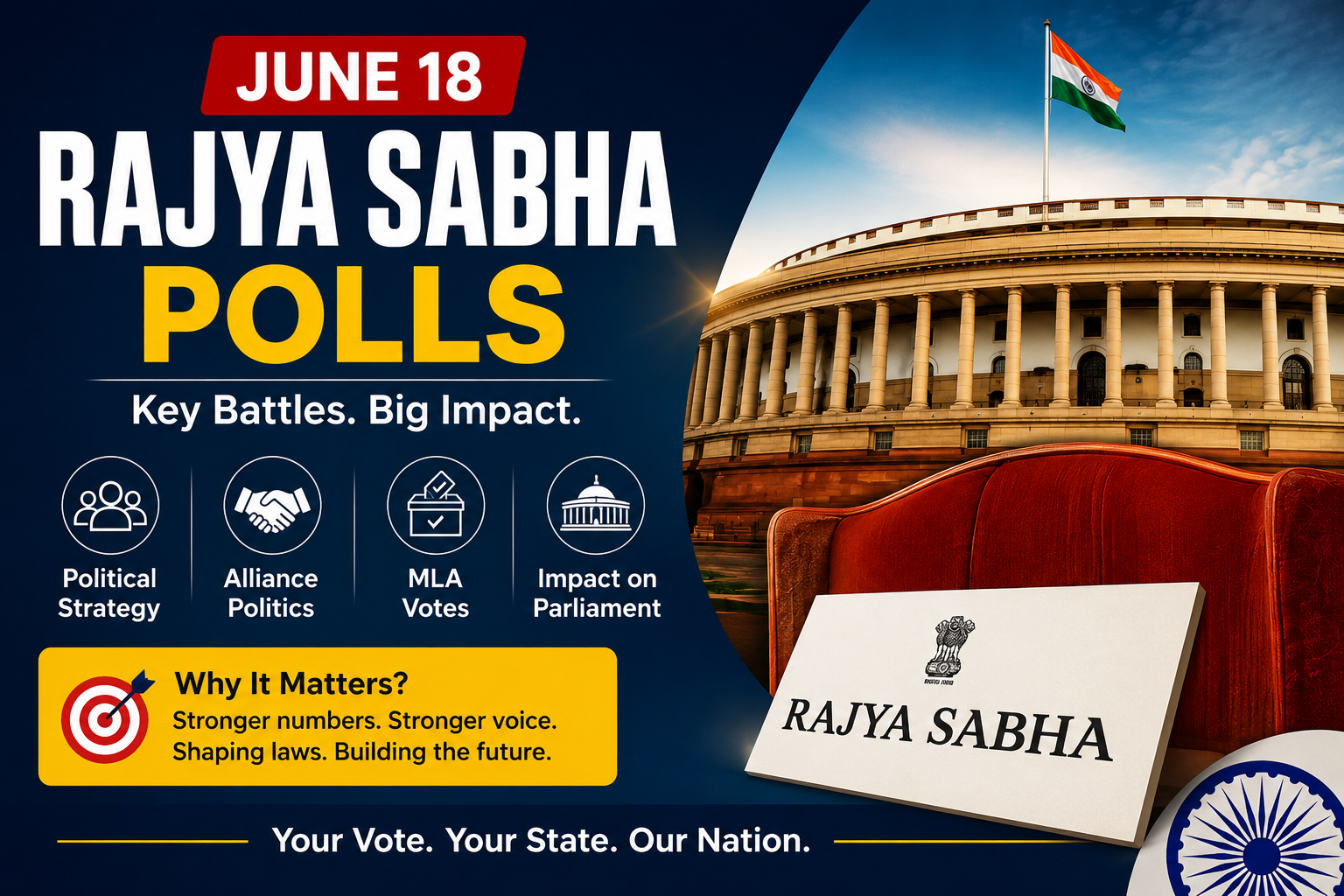
India’s political landscape is once again in focus as the June 18 Rajya Sabha polls approach. These elections are not just about filling parliamentary seats; they carry major political significance for national parties, regional alliances, and the future balance of power in the Indian Parliament.
The Rajya Sabha, also known as the Council of States, plays a crucial role in India’s democratic system. It acts as the upper house of Parliament and is responsible for reviewing legislation, debating national issues, and representing the interests of states.
The upcoming June 18 Rajya Sabha elections are expected to become an important political event because they may influence legislative strength, alliance politics, and strategic decision-making ahead of future national and state elections.
What Are Rajya Sabha Polls?
Rajya Sabha members are not directly elected by the public. Instead, they are elected by elected members of state legislative assemblies through a system of proportional representation.
Rajya Sabha elections are conducted whenever seats become vacant due to:
- Completion of a member’s term
- Resignation
- Death
- Disqualification
The Rajya Sabha has a maximum strength of 250 members, with representatives from states and union territories across India.
Unlike the Lok Sabha, the Rajya Sabha is a permanent house and is never dissolved. One-third of its members retire every two years.
Why the June 18 Rajya Sabha Polls Matter
The June 18 polls are politically important because they can affect the strength of major political parties in Parliament.
A stronger position in the Rajya Sabha helps governments:
- Pass important bills
- Push policy reforms
- Strengthen legislative control
- Improve political influence
For opposition parties, Rajya Sabha numbers are equally important because they can challenge legislation and influence parliamentary debates.
The outcome of these polls may also impact political momentum before upcoming elections in several states.
Key Political Parties in Focus
The elections are expected to witness strong competition among major political parties, including:
- Bharatiya Janata Party (BJP)
- Indian National Congress (INC)
- Regional parties
- State-based alliances
Several regional parties may also play a decisive role depending on assembly numbers in different states.
Political analysts believe alliance management and cross-voting could become major factors in closely contested seats.
Importance of Numbers in Rajya Sabha
Unlike general elections, Rajya Sabha elections are largely based on legislative arithmetic.
The number of MLAs a party has in a state assembly determines its ability to win Rajya Sabha seats from that state.
This makes state politics highly important in determining national parliamentary strength.
Even small regional parties can become influential during Rajya Sabha elections because their support may decide outcomes in tight contests.
Possibility of Cross-Voting
One of the biggest discussion points in Rajya Sabha elections is often cross-voting.
Cross-voting happens when legislators vote against their party line.
This can create political surprises and change expected outcomes.
Political parties usually issue strict instructions to their MLAs to avoid unexpected voting patterns during important elections.
Closely contested Rajya Sabha polls often increase political negotiations and strategic planning among parties.
Impact on National Politics
Rajya Sabha strength directly impacts national governance.
A strong majority in the upper house helps ruling parties pass legislation more smoothly.
Over the years, several major bills in India have faced intense debate in the Rajya Sabha because the ruling government lacked sufficient numbers.
As a result, every Rajya Sabha election becomes politically significant beyond just the seats involved.
The June 18 polls may influence:
- Policy decisions
- Reform bills
- Alliance politics
- Parliamentary strategy
Regional Parties Could Play a Major Role
Regional parties continue to hold considerable influence in Indian politics.
Parties focused on state politics often become kingmakers during Rajya Sabha elections because national parties may require their support.
This strengthens coalition politics and increases the importance of regional leadership.
States with closely balanced assemblies may witness intense political activity ahead of the polls.
Rajya Sabha and Legislative Stability
The Rajya Sabha plays a vital role in maintaining legislative balance.
As the upper house, it reviews bills passed by the Lok Sabha and provides deeper parliamentary discussion on national issues.
It also ensures that states have representation in the national legislative process.
This is why Rajya Sabha elections are important not only politically but also constitutionally.
Political Strategies Before the Polls
Ahead of Rajya Sabha elections, political parties usually focus on:
- Alliance building
- Candidate selection
- MLA coordination
- Vote management
- Preventing cross-voting
Senior leaders often hold multiple strategy meetings to ensure smooth election outcomes.
Candidate selection also becomes important because parties often nominate experienced politicians, economists, legal experts, and influential public figures.
Public Interest in Rajya Sabha Elections
Although Rajya Sabha members are indirectly elected, public interest in these elections has increased significantly in recent years.
People closely follow:
- Party strategies
- Candidate announcements
- Political alliances
- Legislative strength
- Parliamentary debates
Social media and digital news platforms have also increased awareness about parliamentary politics among younger audiences.
Future Political Implications
The June 18 Rajya Sabha polls may have long-term implications for Indian politics.
A stronger parliamentary position can help parties:
- Build political momentum
- Increase policy influence
- Prepare for future elections
- Strengthen national leadership
Political experts believe the results may also indicate changing political trends in various states.
Conclusion
The June 18 Rajya Sabha polls are more than a routine parliamentary process. They represent a significant political event that could influence legislative strength, alliance dynamics, and future political strategies in India.
As major parties prepare for the elections, attention remains focused on numbers, alliances, and possible political surprises.
The outcome of these polls will not only shape the balance of power in the Rajya Sabha but may also impact the broader direction of Indian politics in the coming months.
With growing public interest and increasing political competition, the June 18 Rajya Sabha elections are expected to remain a closely watched event across the country.