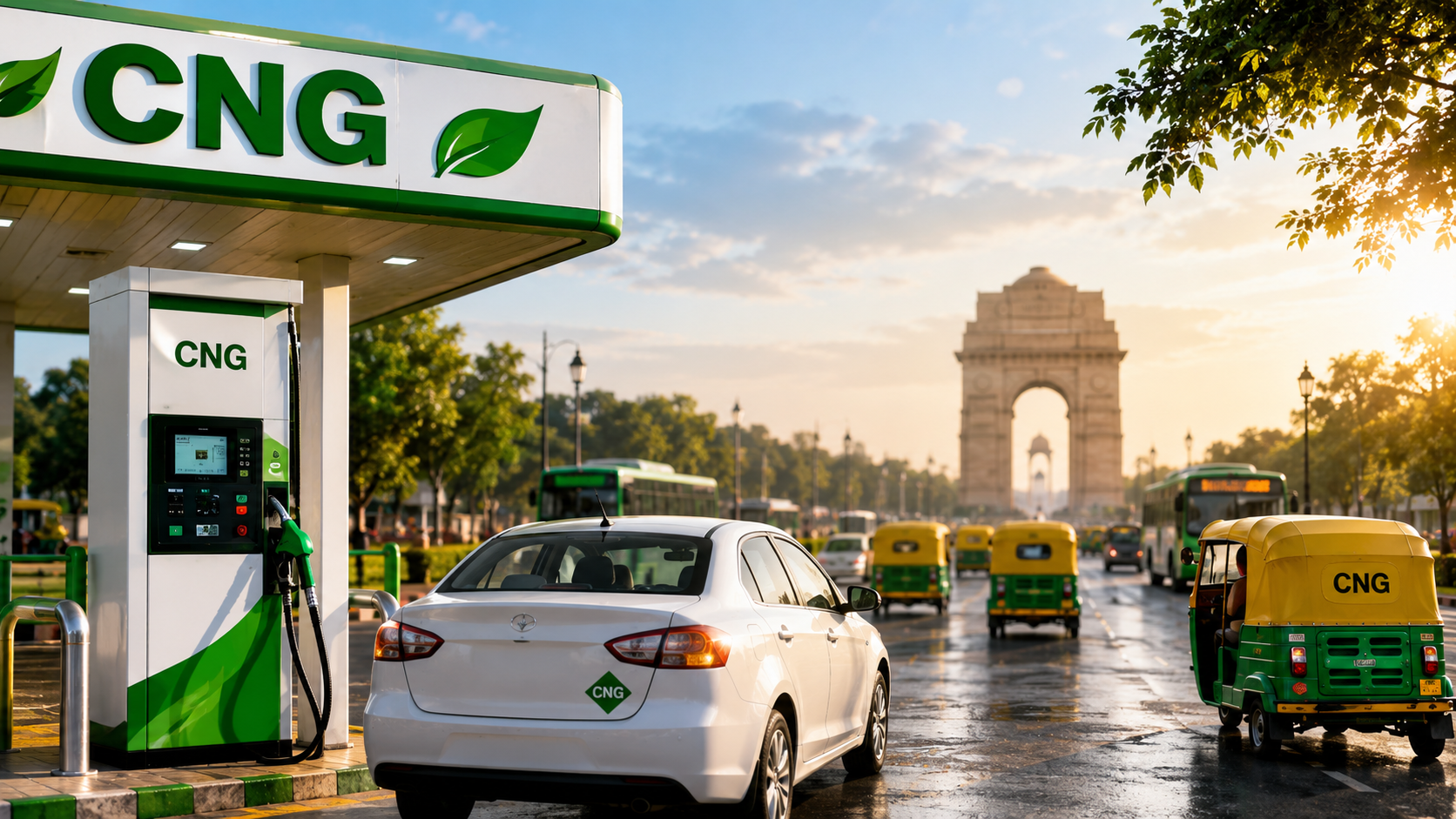
Compressed Natural Gas, commonly known as CNG, has become one of the most important alternative fuels in India’s transportation sector. In cities like Delhi, where pollution, traffic congestion, and fuel costs are major concerns, CNG plays a critical role in supporting cleaner and more affordable transportation systems.
The topic of CNG price in Delhi attracts strong public attention because fuel costs directly affect:
- Household budgets
- Daily commuting expenses
- Transportation businesses
- Public mobility systems
Delhi has one of the largest CNG-based transportation networks in India. Thousands of:
- Auto-rickshaws
- Taxis
- Commercial vehicles
- Private cars
- Public transport buses
depend on CNG as their primary fuel source.
As fuel prices continue fluctuating and environmental concerns grow globally, CNG is increasingly viewed as a cleaner and more economical alternative compared to traditional fuels like petrol and diesel.
The discussion around CNG prices is therefore closely connected with:
- Urban transportation
- Environmental sustainability
- Energy policy
- Economic affordability
Introduction to CNG
Compressed Natural Gas is a cleaner fuel produced from natural gas.
CNG is widely used in:
- Public transportation
- Commercial vehicles
- Private automobiles
because it offers:
- Lower emissions
- Better fuel economy
- Reduced pollution levels
Many governments encourage CNG adoption to reduce urban air pollution and dependence on traditional fossil fuels.
Delhi became one of the leading cities in India to adopt CNG-based transportation systems on a large scale.
Importance of CNG in Delhi
Delhi faces major challenges related to:
- Air pollution
- Traffic congestion
- Urban transportation demand
CNG helps reduce harmful emissions produced by vehicles.
Because of environmental concerns, the city has increasingly promoted cleaner transportation systems over the years.
CNG-based vehicles are widely used because they:
- Produce lower emissions
- Offer cost advantages
- Support cleaner urban mobility
The large-scale adoption of CNG has become an important part of Delhi’s environmental and transportation strategy.
Factors Affecting CNG Prices
CNG prices are influenced by multiple factors.
Major factors include:
- Natural gas prices
- Global energy markets
- Government policies
- Transportation costs
- Supply infrastructure
Energy pricing is closely connected with international market conditions and domestic economic policies.
Changes in global natural gas supply and energy demand can influence fuel pricing trends.
Government taxation and regulatory policies also affect the final retail price of CNG.
Natural Gas and Energy Markets
Natural gas has become one of the world’s most important energy resources.
It is used in:
- Transportation
- Industrial manufacturing
- Electricity generation
- Commercial operations
Global energy markets influence natural gas pricing significantly.
Factors such as:
- International demand
- Supply disruptions
- Geopolitical conditions
- Energy shortages
can affect gas prices worldwide.
Since India imports energy resources, global market changes often influence domestic fuel pricing.
CNG vs Petrol and Diesel
CNG is often considered more economical compared to petrol and diesel.
Major advantages include:
- Lower running cost
- Reduced emissions
- Cleaner engine performance
Because of rising fuel expenses, many vehicle owners prefer CNG-powered vehicles for long-term affordability.
Commercial transportation operators especially benefit from lower operating costs.
CNG adoption has increased steadily because fuel efficiency remains an important financial consideration for urban commuters.
Environmental Benefits of CNG
One of the biggest advantages of CNG is its environmental impact.
Compared to conventional fuels, CNG generally produces:
- Lower carbon emissions
- Reduced air pollutants
- Cleaner combustion
Delhi’s pollution challenges have increased focus on cleaner transportation solutions.
Governments and environmental agencies often encourage CNG usage because it supports:
- Better air quality
- Sustainable mobility
- Reduced urban pollution
Environmental sustainability is becoming increasingly important in transportation planning.
Impact on Public Transportation
Public transportation systems in Delhi depend heavily on CNG.
Thousands of:
- Buses
- Auto-rickshaws
- Taxi fleets
operate using CNG fuel.
Fuel pricing directly affects transportation expenses and public mobility systems.
When CNG prices rise:
- Transportation costs increase
- Commercial operators face pressure
- Daily commuting expenses may rise
Affordable fuel remains important for maintaining efficient urban transportation networks.
Household Budgets and Daily Commuting
Fuel prices directly influence household spending patterns.
For daily commuters, transportation is a necessary expense.
Rising CNG prices may affect:
- Monthly commuting budgets
- Commercial travel costs
- Ride-sharing services
Middle-class households and small transport operators are often highly sensitive to fuel price changes.
Affordable mobility remains important in large urban centers like Delhi.
Commercial Vehicles and Logistics
Commercial transportation businesses heavily depend on fuel efficiency.
CNG is commonly used in:
- Delivery vehicles
- Commercial taxis
- Freight movement systems
Lower fuel costs help businesses manage:
- Operational expenses
- Transportation efficiency
- Profit margins
Fuel pricing therefore affects broader logistics and delivery ecosystems within cities.
Government Policies and Clean Energy
Government energy policies strongly influence fuel adoption patterns.
Authorities increasingly support:
- Cleaner fuels
- Sustainable transportation
- Reduced pollution systems
Policies promoting cleaner mobility often encourage:
- CNG infrastructure expansion
- Fuel accessibility
- Alternative transportation technologies
Public policy plays an important role in shaping long-term transportation trends.
CNG Infrastructure in Delhi
Delhi has developed a large CNG distribution network.
Fuel infrastructure includes:
- CNG filling stations
- Pipeline connectivity
- Distribution systems
Strong infrastructure availability has helped increase CNG adoption across the city.
Fuel accessibility is critical for supporting large-scale transportation systems.
Infrastructure expansion remains important for future clean energy growth.
Urbanization and Transportation Demand
Delhi’s growing population continues increasing transportation demand.
Urbanization creates pressure on:
- Road infrastructure
- Public transport systems
- Fuel consumption
Cleaner fuel solutions are becoming increasingly important because urban mobility needs continue expanding rapidly.
Sustainable transportation planning is now essential for large metropolitan cities.
Electric Vehicles and Future Mobility
While CNG remains important today, future mobility systems are gradually shifting toward:
- Electric vehicles
- Hybrid transportation
- Renewable energy mobility
However, CNG continues serving as an important transitional fuel because:
- It is relatively cleaner
- Infrastructure already exists
- Running costs remain competitive
Alternative fuel systems will likely continue evolving alongside technological innovation.
Energy Security and Fuel Diversification
Countries increasingly focus on energy diversification to reduce dependency on limited fuel sources.
Alternative fuels such as CNG help:
- Improve energy efficiency
- Reduce pollution
- Diversify transportation energy systems
Energy security remains a major concern for growing economies.
Fuel diversification supports long-term sustainability and infrastructure resilience.
Stock Market and Energy Sector Impact
Energy pricing also influences sectors connected with:
- Transportation
- Logistics
- Natural gas distribution
- Infrastructure
Companies operating in energy and gas distribution industries are closely connected with fuel demand trends.
Energy market developments often influence investor sentiment in related industries.
Future Outlook for CNG in Delhi
The future of CNG in Delhi will likely depend on:
- Fuel pricing policies
- Natural gas availability
- Environmental regulations
- Urban transportation demand
As cities continue searching for cleaner transportation solutions, CNG may remain an important part of India’s mobility ecosystem for years.
However, future transportation systems may increasingly integrate:
- Electric mobility
- Renewable energy infrastructure
- Smart transportation technologies
Conclusion
CNG has become an important part of Delhi’s transportation and environmental strategy. Its role in reducing pollution, improving fuel affordability, and supporting public transportation makes it highly relevant in India’s urban mobility ecosystem.
The discussion around CNG prices reflects broader issues connected with energy policy, environmental sustainability, transportation demand, and economic affordability.
As Delhi continues modernizing its transportation infrastructure and addressing pollution challenges, cleaner fuels like CNG will likely continue playing a significant role in shaping the future of sustainable urban mobility and energy-efficient transportation systems.